


Atelier Process
Asymmetric Hemline Pattern Making: Balancing Uneven Edges
On the geometry of uneven edges in Collection I: Nine Orchids.
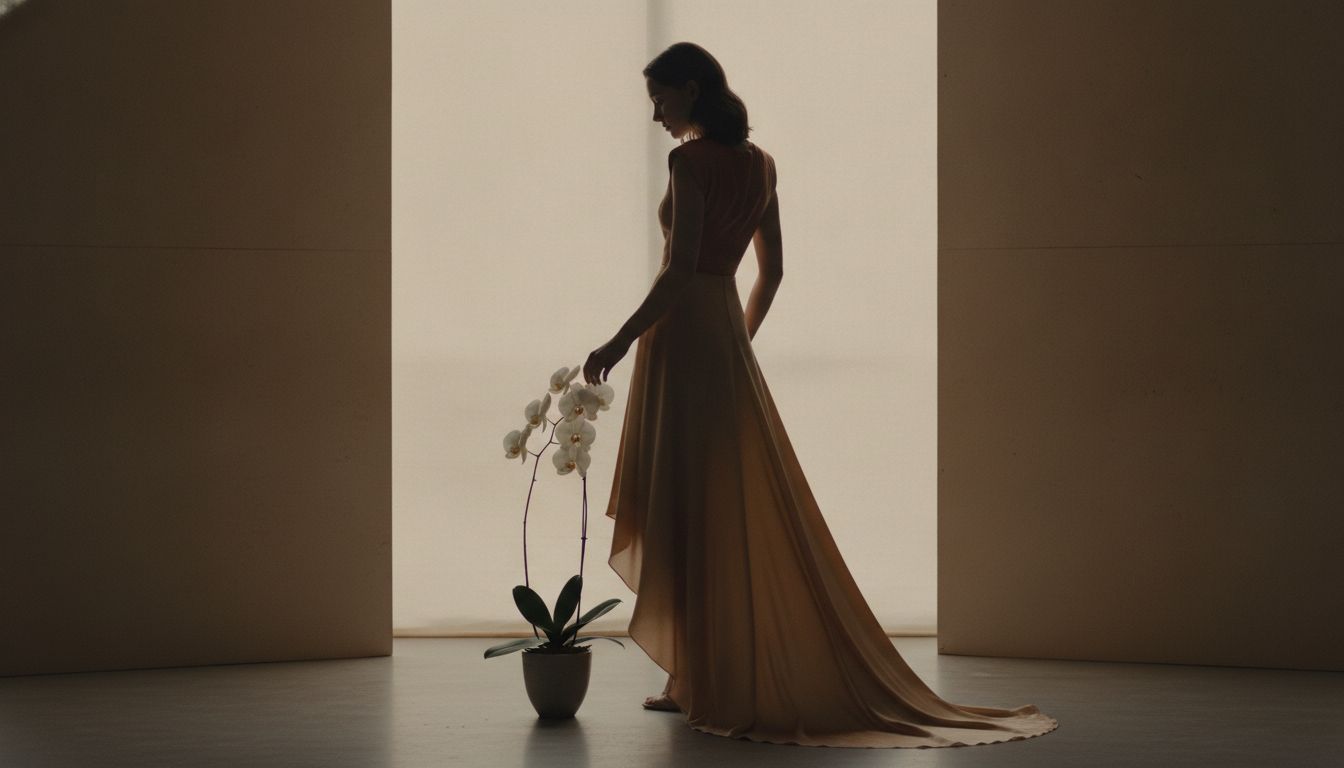
A straight hem settles a garment. An asymmetric hem keeps it in conversation with the body. In Collection I: Nine Orchids, the orchid offered us a curve that grows and releases at its own pace—never mirrored, never rigid. We translated that curve into the lower edge of the silk dress: one side longer, the other lifted, the line moving as the wearer moves.
This is not a cut added at the end. The hem is decided before the first paper pattern is pinned. Every angle changes how the fabric falls, how the seam allowances distribute, and where the garment finds its center of gravity. Balancing an uneven edge is a quiet discipline of geometry and patience.
Why choose an uneven hemline?
The choice is structural, not decorative. In Nine Orchids, the orchid stands for feminine virtue that needs no audience—strength that unfolds in solitude. Its petals do not fall in matched pairs. We wanted the lower edge of the dress to carry that same refusal of sameness: a line that seems to have grown rather than been cut.
The collection pairs this fluid lower edge with structured shoulders and architectural necklines. The contrast is deliberate. Where the upper body is held, the lower body is released. The asymmetric hem creates a diagonal rhythm that carries the eye from hip to ankle, so the silhouette changes with every step.
“Symmetry imposes stillness. Asymmetry asks the garment to keep breathing.”
How do you draft a hem that refuses to stay level?
First, we establish a zero line. Even when the final hem will slope, we begin with a level reference at the desired shortest point. From there, we draw the long edge as a controlled deviation, not as a freehand curve. Every point on the hem is measured perpendicular to the cutting edge, because an allowance that looks even on paper can shrink or flare once the fabric hangs.
The grain line governs where the longer panel keeps its integrity. Silk has weight and memory; if the longest point hangs too close to the bias, it will sag over time. Where the hem drops, we keep the panel closer to the straight grain. Where the hem is lifted or curved upward, we allow a controlled bias so the fabric can ripple softly without pulling the side seam out of place.
Seam allowances are not uniform on an asymmetric edge. At the side seams, where the hemline changes direction, we widen or narrow the allowance so the turn of cloth follows the angle rather than fighting it. We mark the true hemline with notches at the transition points—center front, side seams, the pivot of the curve—so the stitcher knows exactly where the intended line resumes after each interruption.
What does muslin reveal that the paper pattern cannot?
The muslin trial exposes gravity, scale, and proportion. Paper lies flat; the body does not. We drape a silk-cotton substitute on the stand to approximate the weight and drape of the final mulberry silk. The first muslin almost always tells us the same thing: the line that looked balanced on the table reads differently once it leaves the table.
During the Nine Orchids trials, we watched three things:
- The pivot point. Where does the hemline shift from short to long? Move it even two centimeters and the whole silhouette changes.
- The sweep. Does the longer panel travel cleanly, or does it bell outward? A bell means the grain has shifted too far toward the bias.
- The return. When the wearer turns or walks, does the hem settle back to its intended line, or does it twist?
We adjust, re-drape, and transfer the corrected lines back to paper. Each muslin is a conversation between the ideal curve and the real behavior of cloth.
How does the garment keep its balance in motion?
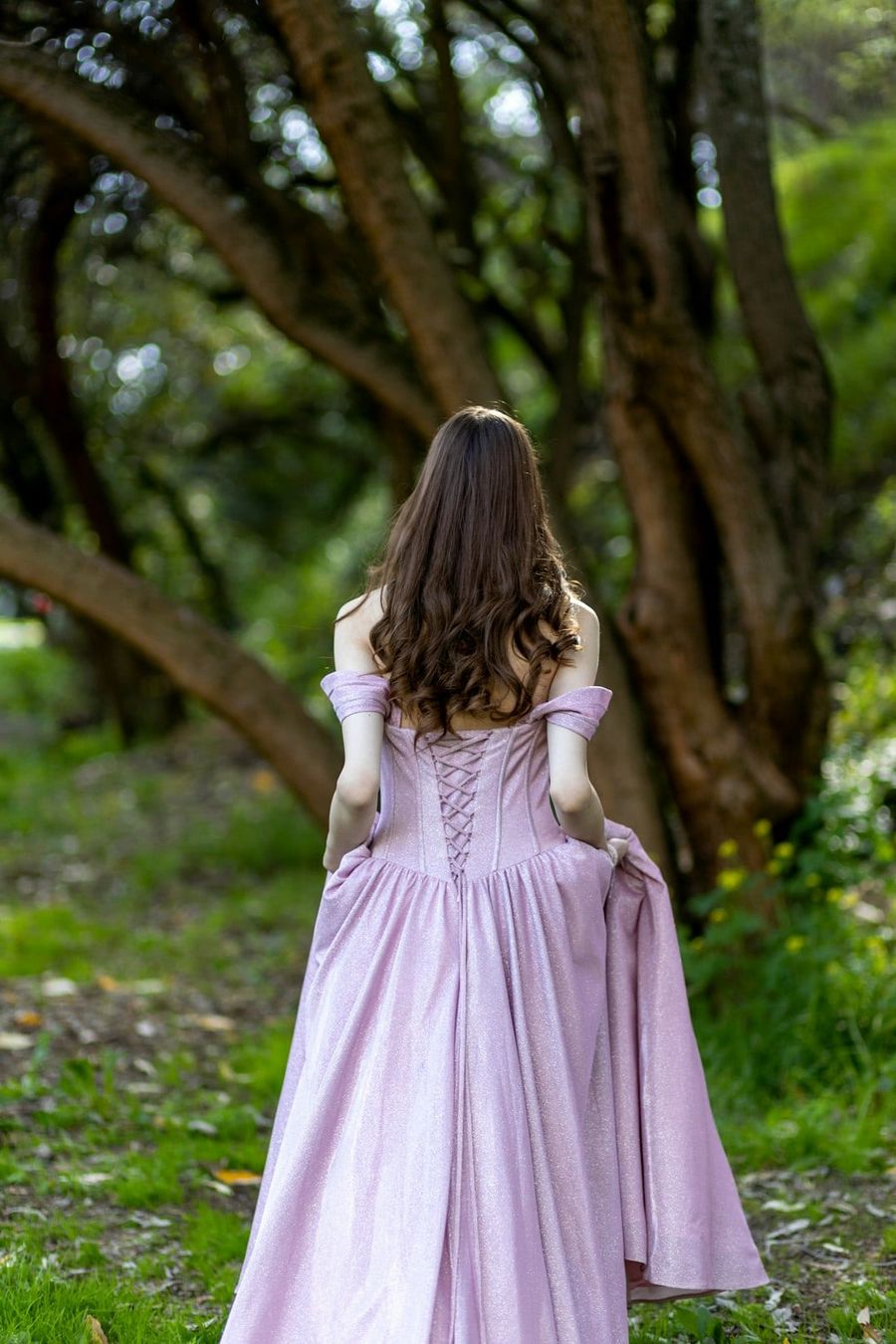
Balance comes from distribution, not from hiding the asymmetry. An uneven hem will pull or sag if the panels are not weighted against one another. We resolve this by aligning the seam lines across the body so that a high point on one side is answered by a longer drape on the other. The waist seam, or a shaped hip yoke, becomes the fulcrum.
In fitting, we observe the garment while walking, sitting, and reaching. We look for:
- Side-seam strain. If the shorter side rides up, the seam allowance or the panel angle needs correction.
- Droop at the longest point. This tells us the grain has drifted; we shift the panel back toward the straight grain or shorten the sweep.
- Twist on the return. If the hem does not settle back after movement, the bias panels are fighting the seams.
The goal is a hemline that moves but does not wander. It should respond to the body, then return to its own quiet logic.
How is an asymmetric edge finished differently?
A straight hem can be turned up by a fixed width and pressed. An asymmetric hem cannot. The fold line changes direction along the curve, so the allowance must be trimmed and shaped after the garment is assembled and the true line is verified on the stand.
For the silk dresses in Nine Orchids, we use a narrow rolled hem that follows the curve closely. Because the grain shifts along the edge, the fabric stretches differently at every point. We mark the stitching line from the right side at regular intervals, then sew slowly, easing the silk where the bias wants to widen and holding it steady where the straight grain resists.
At the side seams, we grade the allowances so the bulk does not collapse the uneven fall. The finishing is slower than a straight hem, but it preserves the line we spent so long balancing.
Caring for an asymmetric silk hem
An uneven hem will settle differently from a straight one. After wearing, hang the dress on a padded hanger and let the bias relax overnight. Steam rather than press directly; if pressing is necessary, use a tailor’s ham to support the curve and avoid flattening the sweep. Store the garment so the longest point hangs freely, without folding the hem against itself.
- Hang to rest after each wear.
- Steam to release creases; press curves over a ham.
- Avoid folding along the hemline in storage.
The line that tempers itself
The asymmetric hem in Nine Orchids is not seeking attention. It is a line that holds its own logic—like an orchid stem that bends without breaking. We balance it not by forcing symmetry, but by listening to how the fabric yields, where the grain resists, and how the body moves through the cloth.
The result is a silhouette that carries quiet resolve. It does not stand still. It walks with you.


